MY APPROACHES
Several approaches.
Personalised support.
As a traditional manual therapist, energy healing practitioner and therapeutic massage practitioner, I combine manual work, energy-based approaches and kinesiology tools according to your situation. Touch, observation and listening guide my sessions.
Breathing and touch can also play a central role in supporting emotional exploration. The techniques presented here are resources I draw on to adapt each session to your needs.
PERSONALISED CARE
Therapeutic massage
Therapeutic massage may focus on a specific area or the body as a whole. I draw particularly on Californian and Swedish techniques, adapting the pace, depth and movements to what brings you to the session.
Californian massage
Broad, flowing and enveloping movements connect different areas of the body. The pace allows time for relaxation and attention to bodily sensations.
Swedish massage
A combination of gliding, kneading and friction techniques for adapted muscular work. The session may cover the whole body or focus on particular areas.
Sports massage
Manual work adapted to your physical activity: preparation for exercise, recovery or attention to a particularly active area. The session takes account of your activity and its timing.
Targeted massage
The session focuses on one or more areas: back, neck, shoulders, limbs or another area of concern. This allows more time to be devoted to your main request.
Stress-relief massage
Time set aside for relaxation, with a pace and pressure adapted to how you feel. Work may focus on the back, neck, shoulders and arms, including through clothing.
Hakim massage
A back massage using slow movements and attentive touch. It offers time for relaxation and awareness of sensations around the back and spine.
Chi Nei Tsang
A Taoist-inspired abdominal massage. Work focuses on the abdomen and combines touch with attention to breathing and sensations, taking account of the sensitivity of this area.
Korean relaxation
A bodywork practice using gentle mobilisation, rocking and vibration, usually through clothing. Movements are adapted to the person and invite an exploration of physical relaxation.
MANUAL WORK
Traditional manual therapy
Traditional manual therapy is central to my practice. My work encompasses muscles, joints and the abdominal region. I adapt my movements, pressure and pace to your tissues, mobility and responses.
Muscle-focused manual therapy
Precise manual work on muscles and surrounding tissues. I explore areas of tension through touch and adapt my movements to the area concerned, with deeper work when appropriate.
Joint-focused manual therapy
I observe movement and work on the tissues around the joints using adapted movements and mobilisation. The focus is on ease of movement and the tension that accompanies it.
Abdominal manual therapy
Manual work on the abdominal region, attentive to tissue tension, breathing and sensations in the abdomen. It forms part of a whole-body approach and does not involve putting organs back into place.
Fascia therapy
Fascia is the connective tissue that surrounds and links different structures of the body. I pay particular attention to it through adapted touch and mobilisation, exploring sensations of tension and tissue mobility.
Craniosacral therapy
A gentle manual approach focusing particularly on the head, neck, spine and sacrum. Touch is light and the pace unhurried, with attention to bodily sensations and relaxation during the session.
ENERGY-BASED APPROACHES
Energy healing
Energy healing is at the heart of my energy-based approach. Trained in traditional and structural energy healing approaches, I work with my hands in contact with or close to the body. Depending on the situation, I use hand passes and movements intended within this tradition to clear, balance and replenish energy. I always adapt my work to your sensations and comfort.
Traditional energy healing
Energy-based work using the laying on of hands and hand passes, with particular attention to presence, observation and the sensations experienced during the session.
Structural energy healing
An energy-based approach focusing particularly on muscular and joint areas, based on the clearing and balancing principles studied during my training. It does not replace a medical examination or treatment.
Tibetan energy
I learned this energy-based practice during my kinesiology training. It is a complementary resource, distinct from my main energy healing practice, and is used only according to your situation and with your agreement.
MOVEMENT AND RESOURCES
Kinesiology
Kinesiology is one of my areas of competence. I use the tools I have learned in this discipline to support the exploration of movement, sensations and personal resources. Muscle testing, when used, is not a medical diagnostic tool.
Brain Gym
Movement and coordination activities that invite you to explore bodily readiness and learning habits. Exercises are selected and adapted to the aim of the session.
The 7 Dimensions of Intelligence — Edu-K
In Educational Kinesiology, the seven dimensions offer a framework for exploring learning and adaptation: laterality (communication), centring (organisation), focus (understanding), motivation (attitude), breathing (vitality), rhythm (coordination) and self-management (body regulation). This model supports the exploration of personal resources and the selection of movement activities adapted to individual needs.
Touch for Health — TFH
A kinesiology method combining muscle testing, movement and balancing procedures specific to this approach. It provides a framework for personalised body-based support.
Touch for Health metaphors
Symbolic images and questions used as prompts for reflection and dialogue. They invite you to explore your experience and resources, without identifying the cause of a symptom or imposing an interpretation.
Tools of the Trade — TOT
A set of tools learned during my kinesiology training, used according to the aim of the session and the person’s situation. They form part of my approach to stress and personal experience.
Basic One Brain — BOB
Kinesiology tools used in the exploration of stress and emotional experience. The work remains centred on what the person expresses and wishes to address.
COMPLEMENTARY RESOURCES
Supporting emotional experience.
Working with plants.
Alongside bodywork, I make space for listening to emotional experience, breathing and plant-based resources. These approaches are integrated according to your situation, needs and the precautions specific to each.
Breathing, touch and altered states of consciousness
Breathing and touch can accompany a state of awareness that differs from everyday attention. Within this setting, I support the exploration of sensations and emotions as they arise. Emotional release is an intention of this work, not an imposed or guaranteed outcome.
EFT — Emotional Freedom Techniques
EFT combines light tapping on certain points of the body with attention to emotions, sensations and thoughts. It can be used as a resource for exploring stress and emotional experience at your own pace. It is a complementary approach and does not replace medical or psychotherapeutic care when needed.
Maïeusthésie
A supportive approach based on listening to and acknowledging the person’s experience. It makes space for what arises in the conversation, without forcing emotional expression or imposing an interpretation.
Foundations of psychology
This knowledge enriches my listening, understanding of emotional experience and approach to support. It forms part of the foundations of my practice and is not offered as a psychotherapy service.
Aromatherapy
Essential oils may complement some sessions. Their selection and dilution take account of their intended use and your situation. They are not used systematically; allergies, treatments and specific precautions are considered.
Herbal approaches
An approach concerned with the use of plants and their preparations. Any advice takes account of your situation, precautions and possible interactions with your treatments, without replacing a medical prescription.
Strategic numerology
A symbolic and reflective approach that uses numbers as prompts for self-understanding. It offers ways to explore personal resources and current questions, without prediction, diagnosis or imposed interpretations.
GET TO KNOW ME
Precision, listening
and manual work.
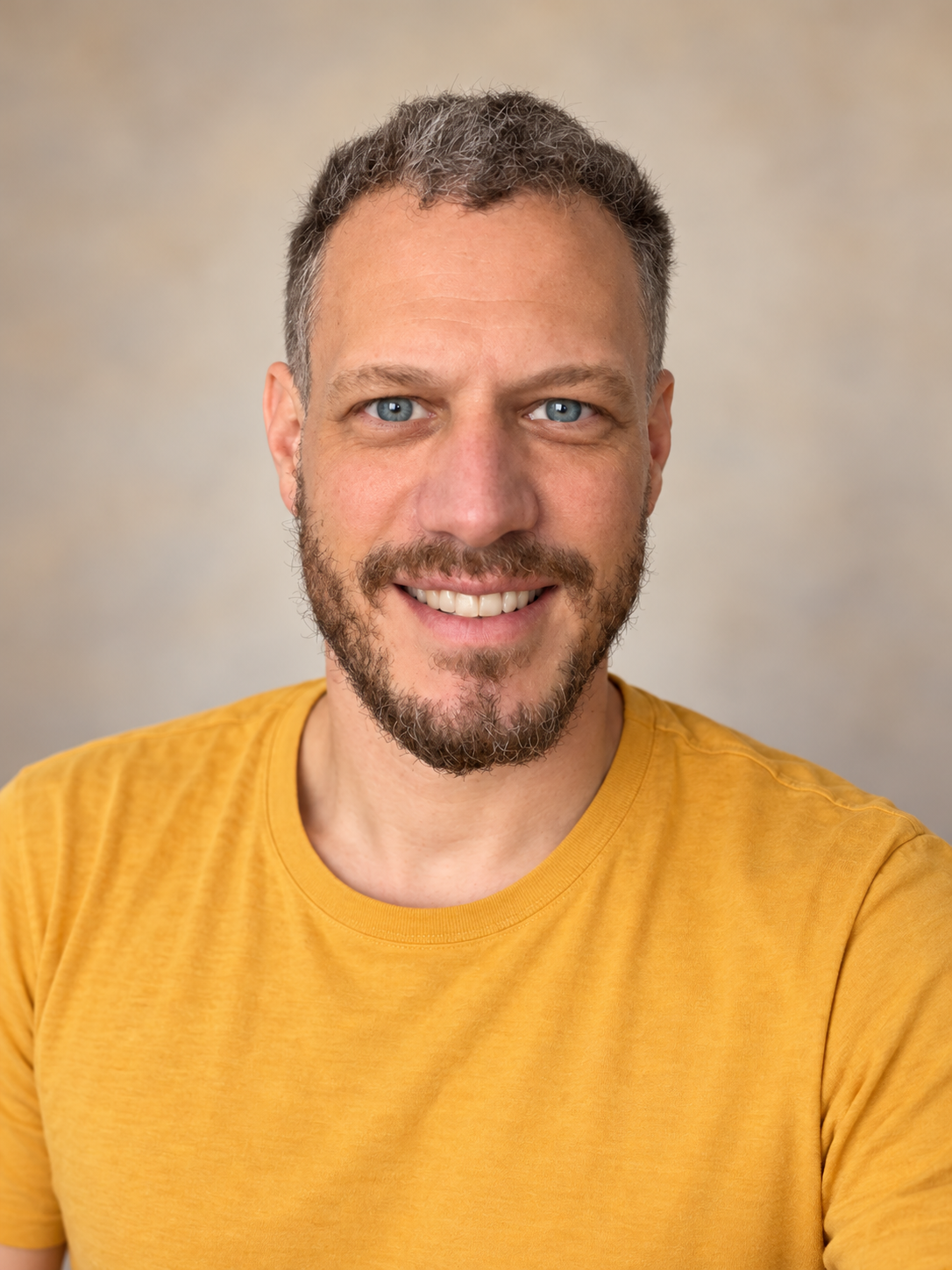
After a scientific background in geology and geomatics, I turned towards manual therapies and complementary approaches, with the intention of supporting each person as a whole.
I trained in therapeutic massage and completed a full programme in manual therapy for muscles, joints and the abdomen, as well as professional training in energy healing. My background includes a first-cycle diploma in anatomy, physiology and pathology.
Over the years, I have broadened my practice through training in Chi Nei Tsang, Hakim massage, fascial and craniosacral techniques, aromatherapy and other complementary approaches.
I am currently continuing my kinesiology training, including Touch for Health, Brain Gym and One Brain, with the aim of obtaining the Swiss federal professional qualification.
Today, I personally welcome you to my three practices in Geneva and Meyrin, with an approach based on listening, precise touch and adaptation to your needs.
MY TRAINING BACKGROUND
Training and qualifications
A background enriched by initial training, specialisations and continuing education. Here are my main diplomas and certificates, grouped by area of practice.
Manual therapies
- Therapeutic massage — certificate, Équilibre Formation, 218 hours (2018).
- Manual therapy for muscles, joints and the abdomen — full programme attested, École des Rebouteux, 168 hours (2021–2022).
- Hakim massage — certificate of attendance, Équilibre Formation, 16 hours (2020).
- Craniosacral and fascial techniques — continuing education, Arts-Théra, 12 hours (2018).
- Thai Yoga Massage, abdominal focus — continuing education, Arts-Théra, 19 hours (2019).
- Chi Nei Tsang — participation in module 1, Universal Healing Tao Switzerland (2021).
Biomedical knowledge and plants
- First cycle in anatomy, physiology and pathology — ESSR diploma, 150 hours (2017).
- Aromatherapy, levels 1 to 3 — three certificates of attendance, Équilibre Formation, 54 hours 30 minutes in total (2018).
- Energy-based herbal approaches — 32-hour training course (2023).
Energy-based approaches
- Energy healing — professional training certificate, École des Guérisseurs, 200 hours (2025).
- Reiki Usui Shiki Ryoho — second-degree certificate (2018).
- Tibetan energy and vitality — K-Power training (2026).
Kinesiology — ongoing training
- Brain Gym 101 — training certificate, 30 hours (2025).
- 7 Dimensions — Edu-K — training certificate, 32 hours (2026).
- Life theme — training, Équilibre Formation, 16 hours (2024).
- Colour balancing — certificate of attendance, Équilibre Formation, 8 hours (2025).
- Three In One Concepts: Tools of the Trade and Basic One Brain — certificates of attendance, 16 and 24 hours (2025).
- Touch for Health Synthesis — certificate, at least 75 hours (2026).
- Touch for Health: goals and metaphors — certificate, at least 16 hours (2026).
I am continuing my kinesiology training with the aim of obtaining the Swiss federal professional qualification.
MOVING FORWARD TOGETHER
A question about
your session?
You are welcome to contact me before booking if you are unsure which approach or session length to choose.
